Friday, March 6, 2015
Thursday, March 5, 2015
656 R and D II -2nd submission-geography of other
This post shows research for the actual structure of the carnival style shooting gallery. There are pictures of the grotto stalagmites and stalactites cut from wood panels that will be attached to the walls, partially hiding the "other" creatures and forms that will comprise the targets to be shot at. There is a schematic drawing of the gallery in three quarter view. The tongue shape will be used as a podium for holding the sling shots and ammo.
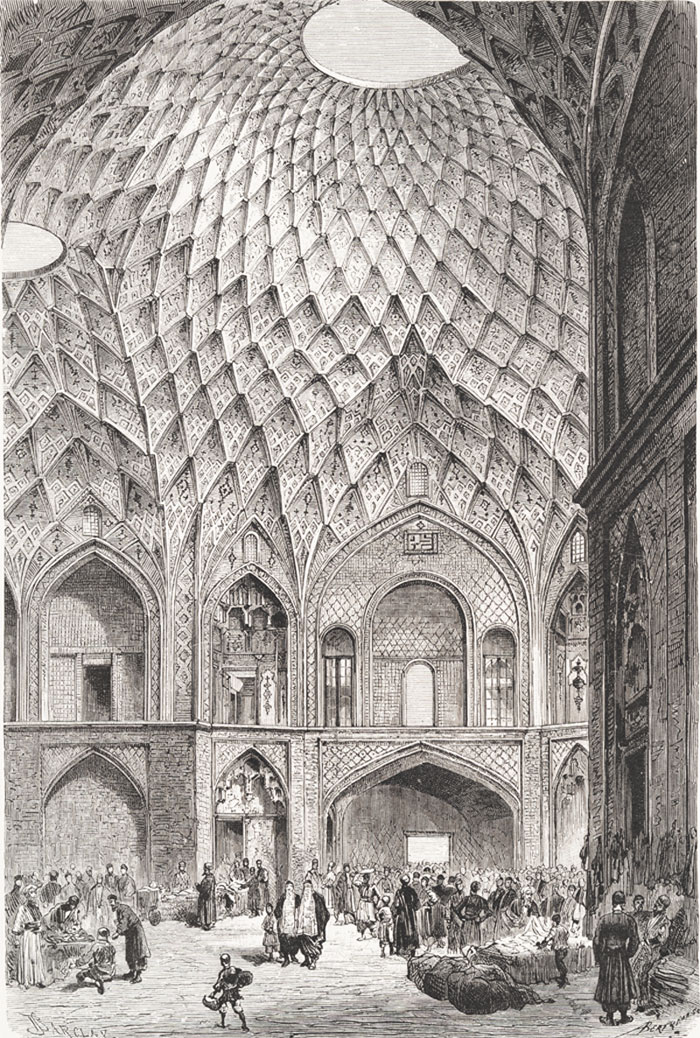
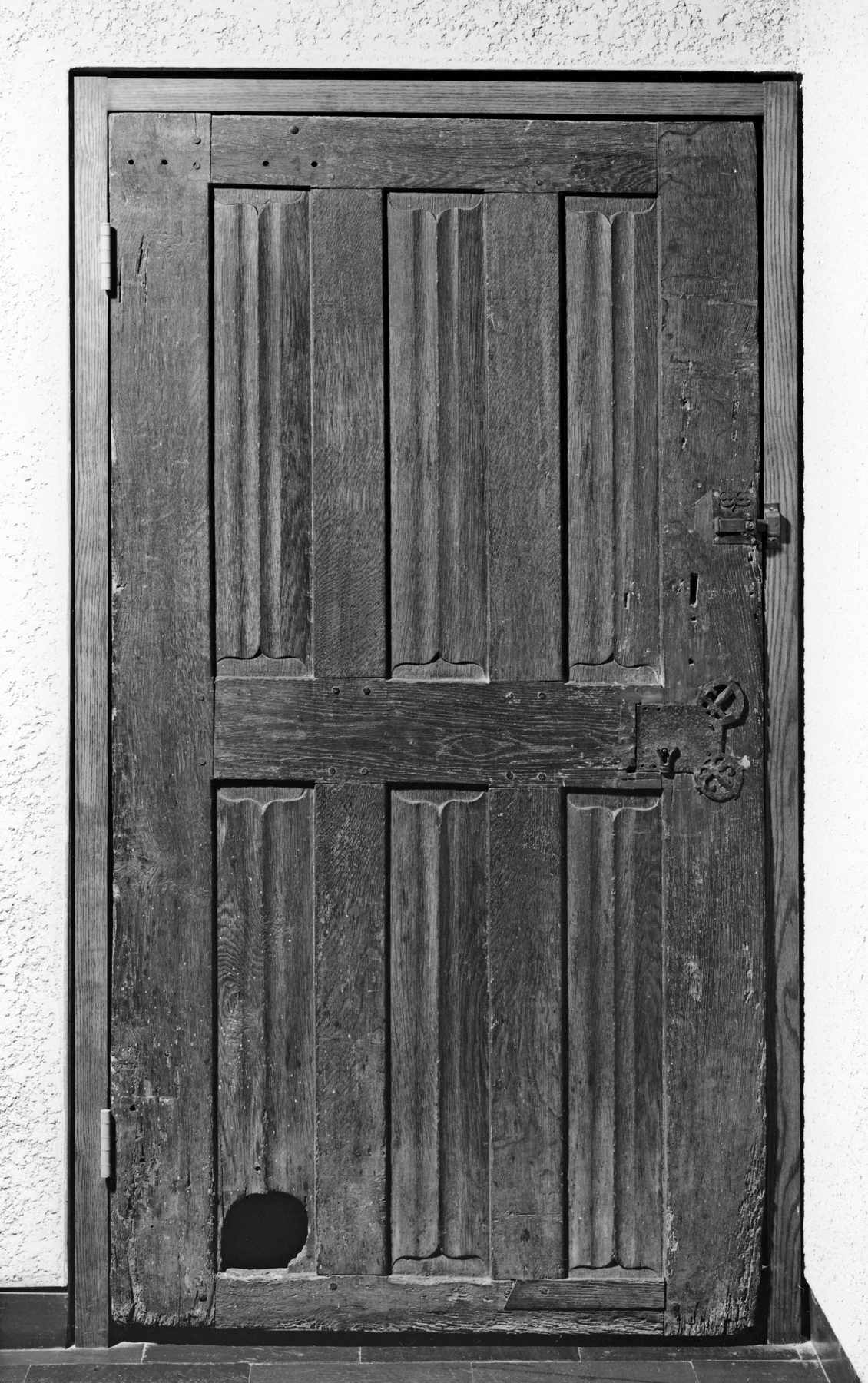
I am finding similarities in the visual relationships between the grotto as represented in renaissance follies and the concept of the temple curtain in Hebrew traditions. Both of these texture fields are signatures of place. The places where the other" is often encountered. I am also starting to see relationships between the material used in making the temple curtains and games of chance as in billiard and black jack table coverings. That material is called baize
| http://img.tfd.com/architecture/f0650-01.png |
| http://img.tfd.com/architecture/f0934-02.png |
| http://www.iranicaonline.org/uploads/files/Kashan/kashan_05_2_fig5.jpg |
| http://thumbs.dreamstime.com/x/stalactites-stalagmites-bermuda-11126839.jpg |
Wednesday, February 18, 2015
Grotto
Grotts
A grotto (Italian grotta and French grotte) is any type of natural or artificial cave that is associated with modern, historic, or prehistoric use by humans. When it is not an artificial garden feature, a grotto is often a small cave near water and often flooded or liable to flood at high tide. The picturesque Grotta Azzurra at Capri and the grotto of the villa of Tiberius in the Bay of Naples are outstanding natural seashore grottoes. Whether in tidal water or high up in hills, they are very often in limestone geology where the acidity dissolved in percolating waterhas dissolved the carbonates of the rock matrix as it has passed through what were originally small fissures. Seekarst topography, cavern. Wiki
association with Karst -apparitions of Mary/venus ocean and water. Cenotes and Maya divination rituals.
Tuesday, February 10, 2015
Monday, January 26, 2015
R&D II 2015 spring first submission
During last semester’s investigations I started to explore traditional linear
narrative devices and a spectrum between hyper linear structures and trans
linear narrative representations. My original narrative construction was based
on speculative literature involving the basic tropes of classic science fiction
and psychological horror of midcentury America, specifically Phillip K Dick,
Frank Herbert, Rod Sterling and Gene Roddenberry. The story was titled Uncanny Valley after the psychological
phenomenon of the same name. The uncanny valley, according to Oxford dictionary,
originated in the 1970s from a
translation of Japanese bukimi no tani, coined by the roboticist
Masahiro Moti, who created a graph that plotted the emotional response of a
human being to a robot against the increase in the perceived realism of a
robot. Oxford states that the graph showed a significant dip at the point where
the robot's resemblance to a human is perceived to be almost exact. I chose this line of development mainly
because of the work I was already producing. After categorizing the specific
elements that I repeatedly drew I came to recognize two major themes in my
work: 1. The Other (including masks, costuming, as well as anamorphic shapes and
distortions) 2. Time and space as an attempt at organizing reality in a
durational capacity. The second subject matter
involving time and space manifested in the form of journaling, juxtaposed with
visual renderings often tangentially related. In approaching the concept of
narrative directly, I realized that narrative could have dimensions I had been
aware of but had not actually put into practice. Parsing narrative in terms of
rational progression and mathematical models led me to visualize two working structures
as a starting point for this semester’s investigations. Specifically, the geometric language of
points, lines, and rays has given me valuable tools for organizing my thoughts regarding
narrative. I realized traditional notions
of narrative may be represented by two points and a line, one point
representing a beginning and one point representing an end and a line between
them representing the temporal progression of narrative. The model of narrative
I found most useful closely resembled the ontological theories of Bergson’s Duration
and Deleuze’s ideas of the moment of apprehension. A mathematical representation of the hyper
linear model would look more like an explosion than a clothesline, where the
point origin is replaced by a juncture of overlapping rays with no point of
origin or expression of an end. I want to keep working with the idea of
narrative in my work but I feel it must evolve indirectly. I found that
limiting the imagery of my drawings to a specific story or traditional linear narrative
structure had a double-sided effect. The traditional linear structure actually
fed the flow of ideas but the execution of those ideas was daunting, partially
due to their finite (The End) characteristics. I found that sharing the
narrative (ephemeral, non linear, telling never ending, or never even actually
beginning) of what I intended to do was more exhilarating than the feedback of
the actual work. This performance in sharing of the story felt more “real” than
explicitly trying to represent them as objects.
At this point, my conclusions have given way to the new question: has
modern/post modern/pseudo modern ontology come down to the compromises of Cartesian
vs Quantum Wizards of OZ? Maybe it has something to do with actual objects
versus objects as pure thought form ,at which point the thoughts begin to
transcend the limits of the person experiencing them. Is the experience greater
than the sum of its parts?
Research Avenues
I
will research the cargo cult and carnival tropes as the narrative meta
structures to my aesthetic investigations. Utilizing my own resources of a
woodshop studio, I will explore elements of a carnival language and theatrical
presentation. Specifically the carnival as a cultural form used to represent
objectification, reification and address the breakdown of contemporary social and
personal stratification. I will ask the
questions of how the notion of the cargo cult has evolved to represent modern
parities between global cultures as well as technological hegemony. I will also
address how the device of the carnival is expressed in contemporary cultural
practices. I hope to create a carnival theatre as an interactive narrative
machine of actual experiences.
Goal
My goal is to build a four foot
by eight foot shooting gallery complete with targets and “guns”. I will break
it down roughly into 6 parts to correspond with the 6 works requirement. I will
use two by fours and plywood, maybe canvas, painted with exterior house paint
and water based one shot paint. The targets will represent “The Other” and will
be made of insulation board and plywood with motion powered by an electric can
opener and bicycle parts.
Further notes-Mark making through arbitrary means-
Surrealist automatismhttp://en.wikipedia.org/wiki/Surrealist_automatism
Automatism has taken on many forms: the automatic writing and drawing initially (and still to this day) practiced by surrealists can be compared to similar, or perhaps parallel phenomena, such as the non-idiomatic improvisation.
Saturday, January 3, 2015
Spring 2015 proposal
During last semesters
investigations I started to explore traditional linear narrative devices and a
spectrum between hyper linear structures and trans linear narrative representations.
My original narrative construction was based on speculative literature
involving the basic tropes of classic science fiction and psychological horror
of mid century America, specifically Phillip K Dick, Frank Herbert Rod Sterling
and Gene Roddenberry. The story was titled Uncanny
Valley after the psychological phenomenon of the same name. The uncanny
valley according to Oxford dictionary originated in the ” 1970s: from a translation of Japanese
bukimi no tani, coined by the roboticist Masahiro Moti, who created a
graph that plotted the emotional response of a human being to a robot against
the increase in the perceived realism of a robot; the graph showed a
significant dip at the point where the robot's resemblance to a human is perceived
to be almost exact.” I chose this
line of development mainly because of the work I was already producing. After
categorizing the specific elements that I repeatedly drew I came to recognize
two major themes in my work. 1. The Other ( including masks, costuming, as well
as anamorphic shapes and distortions)
2. Time and space as an attempt at organizing reality in a durational
capacity. The second subject matter
involving time and space manifested in the form of journaling juxtaposed with
visual renderings often tangentially related. In approaching the concept of
narrative directly as I did I realized that narrative could have dimensions I
had been aware of but had not actually put into practice. Parsing narrative in
terms of rational progression and mathematical models lead me to visualize two
working structures as a starting point for this semesters investigations. Specifically the geometric language of
points lines and rays has given me valuable tools for organizing my thoughts regarding
narrative. I realized traditional notions
of narrative can be represented by two points and a line, one point
representing a beginning and one point representing an end and a line between
them representing the temporal progression of narrative. The model of narrative
I found most useful closely resembled the ontological theories of Bergson’s Duration
and Deleuze’s ideas of the moment of apprehension. A mathematical representation of the hyper linear model would
look more like an explosion than a clothes line, where the point origin is
replaced by a juncture of overlapping rays with no point of origin or
expression of an end. I want to keep working with the idea of narrative in my
work but I feel it must evolve indirectly. I found that limiting the imagery of
my drawings to a specific story or traditional linear narrative structure had a
double sided effect. The traditional linear structure actually fed the flow of
ideas but the execution of those ideas was daunting partially due to their
finite (The End) characteristics. I found that sharing the narrative (ephemeral
non linear telling never ending or never even actually beginning) of what I
intended to do was more exhilarating than the feedback of the actual work. This
performance in sharing of the story felt more ”real” than explicitly trying to
represent them as objects. At this
point my conclusions have given way to the new question: has modern/post
modern/pseudo modern ontology come down to the compromises of Cartesian vs Quantum wizards of OZ. Maybe
it has something to do with actual objects versus objects as pure thought form
at which point the thoughts begin to transcend the limits of the experiencer. Is
the experience greater than the sum of its parts?
Research Avenues
I will research the cargo cult and carnival tropes as the narrative meta
structures to my aesthetic investigations. Utilizing my own resources of a
woodshop studio, I will explore elements of a carnival language and theatrical
presentation. Specifically the carnival as a cultural form used to represent
objectification, reification and address the breakdown of contemporary social and
personal stratification. I will
ask the questions of how the notion of the cargo cult has evolved to represent
modern parities between global cultures as well as technological hegemony. I
will also address how the device of the carnival is expressed in contemporary
cultural practices. I hope to create a carnival theatre as an interactive
narrative machine of actual experiences.
Goal
My goal is to build a four foot by
eight foot shooting gallery complete with targets and “guns”. I will break it
down roughly into 6 parts to correspond with the 6 works requirement. I will
use two by fours and plywood, maybe canvas , painted with exterior house paint
and water based one shot paint. The targets will represent “The Other” and will
be made of insulation board and plywood with motion powered by an electric can
opener and bicycle parts.
Wednesday, September 24, 2014
Subscribe to:
Posts (Atom)